Pre-season preparation is the key to minimizing hurricane damage to your roof and avoiding costly post-storm repairs.
Living in Largo, Pinellas County Florida means living with hurricane season. From June 1st through November 30th, every homeowner in Pinellas County needs to think about storm preparedness — and the roof is the single most important structural element to protect per Florida Building Code requirements. A well-maintained, properly reinforced roof with hurricane straps and impact-resistant materials is your home's first and most critical defense against hurricane-force winds and flooding rain. Hurricane roof inspection: Call (727) 274-9174 - Free estimates.
As licensed Pinellas County roofing contractors (CCC/CBC certified), we've helped hundreds of Largo, Clearwater, and Pinellas County homeowners prepare their roofs for storm season with wind mitigation inspections, hurricane straps, and Florida Building Code compliant reinforcement. Here are the 8 most important steps every Florida homeowner should take before June 1st.
Don't wait for a named storm warning. Once a storm enters the Gulf, Pinellas County roofing contractors are immediately overwhelmed. Prepare your roof now with wind mitigation — before you need emergency tarping service.
Schedule a Pre-Season Roof Inspection
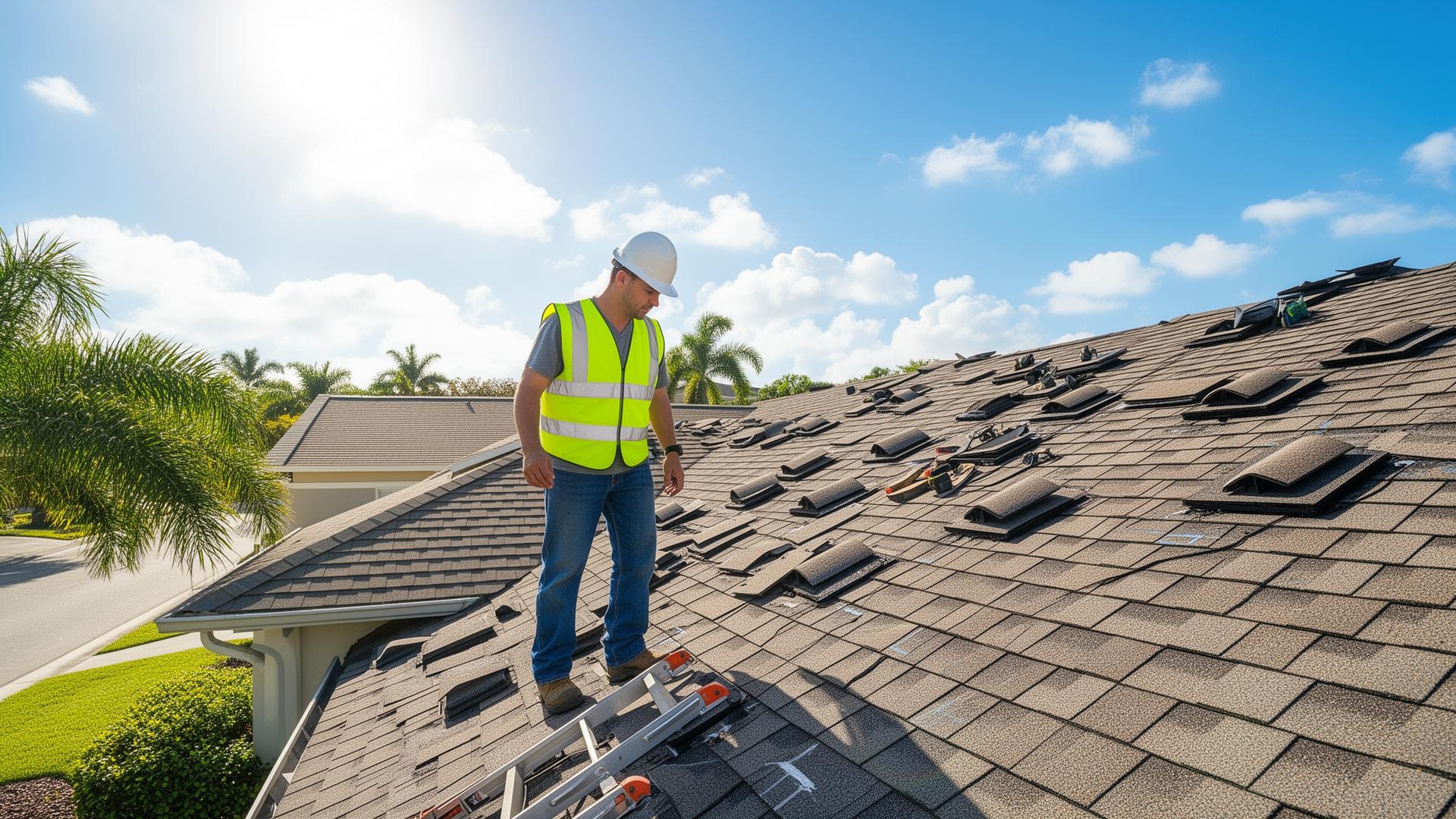
The single most important thing you can do before hurricane season is have a licensed roofing contractor inspect your roof. They'll identify compromised shingles, deteriorating flashing, weakened seals around vents and skylights, and any areas where water could penetrate during a storm. Inspections should happen every spring — ideally before June 1st when the Atlantic hurricane season officially begins.
Pro Tip: Book your inspection in April or May. By June, roofing contractors are swamped with storm-season demand and wait times stretch to weeks.
Repair or Replace Damaged Shingles
Any cracked, curled, loose, or missing shingles identified in your inspection should be repaired or replaced before hurricane season. A storm hitting a roof with pre-existing shingle damage will dramatically escalate the repair bill. High winds catch the edges of compromised shingles and peel them back, exposing the decking beneath to catastrophic water intrusion. Shingle repair is inexpensive compared to the alternative.
Pro Tip: If more than 20–30% of your shingles show significant wear, replacement may be more cost-effective than patching multiple areas.
Inspect and Reinforce Flashing
Flashing — the thin metal sealing joints around chimneys, skylights, vent pipes, and valleys — is the most common source of hurricane-related water intrusion. High winds and pressure differentials during storms force water under even slightly loose flashing. All flashing should be sealed with roofing cement and physically secure before any named storm approaches. Pay special attention to chimney step flashing and skylight frames.
Pro Tip: Hire a contractor to reseal all flashings with a fresh bead of roofing cement annually — it's one of the cheapest and most effective storm-prep investments.
Upgrade to Impact-Resistant Shingles
If you're due for a roof replacement, hurricane season is the perfect motivation to upgrade to Class 3 or Class 4 impact-resistant (IR) shingles. These shingles use a modified asphalt formulation that resists both hail impact and high-wind uplift significantly better than standard shingles. Many Florida insurance companies offer premium discounts of 10–30% for documented impact-resistant roofing — making the upgrade partially self-funding.
Pro Tip: Request the manufacturer's certification documents when installing IR shingles. Your insurance company will need them to apply the discount.
Install or Inspect Hurricane Straps
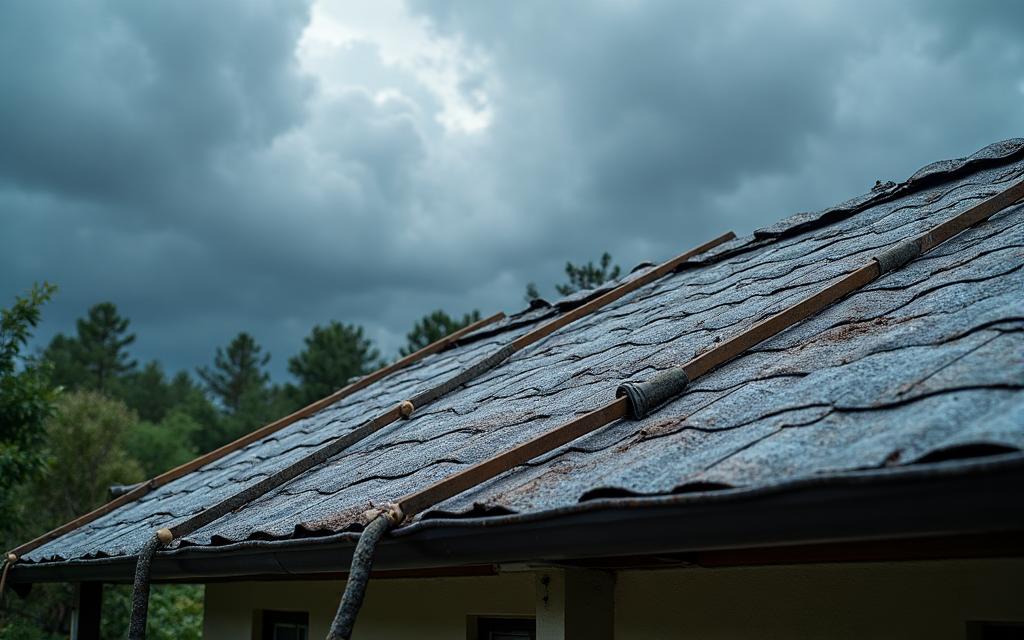
Hurricane straps (also called tie-downs or clips) are metal connectors that anchor your roof trusses to the walls of your home, dramatically reducing the risk of roof blow-off during high winds. Building codes require them in new Florida construction, but many older homes lack adequate strapping. A structural roofer can assess your existing connections and add straps where needed. This is especially important for homes built before 1994.
Pro Tip: Under Florida's Uniform Mitigation Verification Inspection (UMVI) program, homes with hurricane straps qualify for significant insurance premium reductions.
Clean and Secure Your Gutters
Clogged gutters can't drain the massive volume of water a hurricane dumps — typically 10–20 inches in a matter of hours. Backed-up water overflows under the roofline, saturating fascia boards and penetrating into wall cavities. Before storm season, thoroughly clean all gutters, flush downspouts, and check that all gutter sections are securely attached. Loose gutters become projectiles in high winds.
Pro Tip: Direct downspouts at least 6 feet from your foundation. During a hurricane, the volume of water is extraordinary — poor drainage can cause flooding even in a well-built home.
Trim Trees and Remove Debris
Falling trees and broken branches are among the leading causes of catastrophic roof damage during hurricanes. Before storm season, inspect all trees on and adjacent to your property. Remove dead branches, have diseased or structurally compromised trees professionally assessed, and trim all branches within 10 feet of your roofline. Remove any outdoor objects — furniture, potted plants, decorations — that could become airborne projectiles.
Pro Tip: A certified arborist can assess tree health and recommend whether a tree poses a risk to your home that pruning alone won't address.
Document Your Roof and Review Your Insurance
Before any storm, photograph your entire roof from the ground, your gutters, skylights, and any other exterior features. Store these photos in cloud storage along with your receipts for any recent roofing work. Review your homeowner's insurance policy — understand your wind and hurricane deductibles, which in Florida are often 2–5% of your home's insured value rather than a flat dollar amount. Ensure your coverage limits are adequate for full replacement.
Pro Tip: Create a home inventory video walking through every room and noting the condition of walls and ceilings. This is invaluable if you need to file an interior water damage claim after a storm.
Pre-Storm Season Checklist
Professional roof inspection (by May)
Repair all damaged shingles
Reseal or replace flashing
Consider impact-resistant shingles
Inspect hurricane straps
Clean and secure gutters
Trim overhanging trees
Document and photograph your roof
Review insurance coverage
Store outdoor items before any storm
The Bottom Line
Every year, Pinellas County homeowners who invested in pre-season roof preparation suffer dramatically less damage than those who didn't. A professional inspection, targeted repairs, and smart upgrades like impact-resistant shingles and hurricane strapping can mean the difference between a roof that survives a major storm and one that doesn't. Don't wait — prepare before June 1st while contractors are still available.